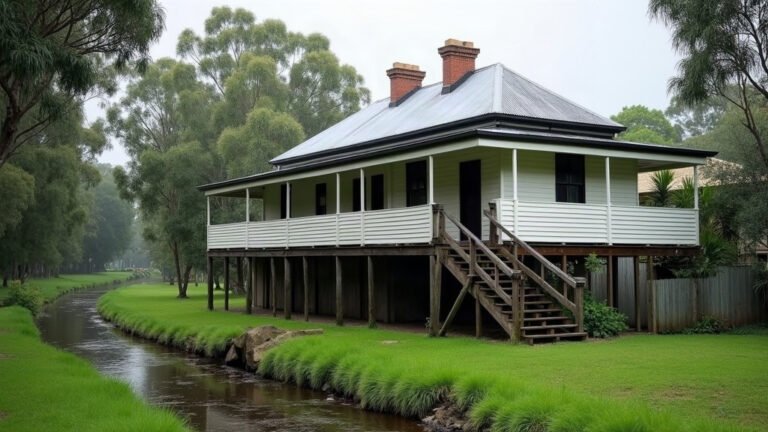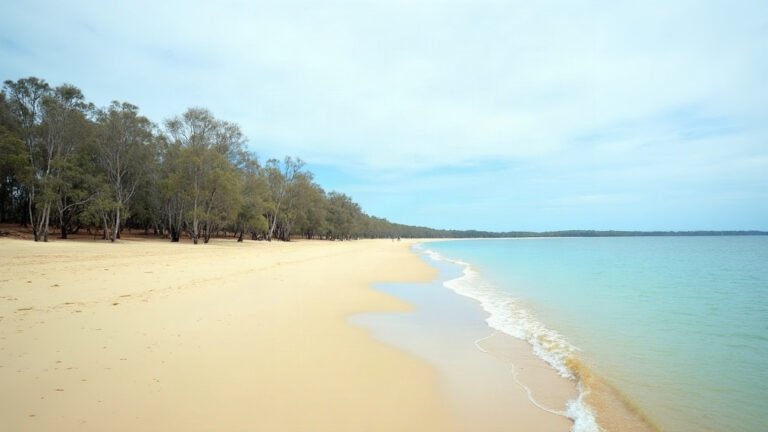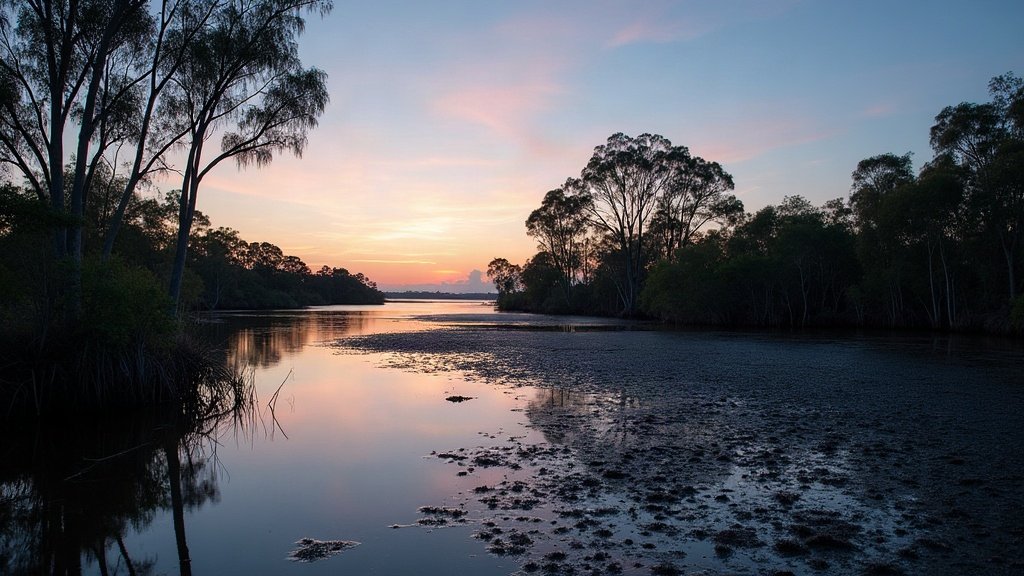
If you are looking at a home near the water in bayside Brisbane, find out how close it is to mangroves and tidal mudflats before you buy. That is where biting midges breed. Redland City Council says it cannot treat biting midges with chemical sprays, so the protection is up to each household.
Key takeaways
- Where they breed: mud and wet soil in tidal zones, which on the Redlands Coast means intertidal mangroves and mudflats.
- When they bite: mostly at dawn and dusk, with the worst months in spring and autumn and a break in winter.
- Distance matters: a Queensland Health guideline rates the midge problem as intense within 1.5 km of a breeding site.
- No council spraying: the chemicals that work on midges are not approved for the Moreton Bay Marine Park.
What are biting midges and why do bayside suburbs get them?
Biting midges are tiny flies, about 1 to 2 mm long, often called sandflies. Redland City Council says their larvae live in the mud and wet soils of tidal zones, and that the city is home to five main coastal species. Its biting midge FAQ fact sheet puts the breeding grounds along the intertidal mangroves and mudflat areas of the Redlands Coast.
So the problem follows the shoreline. A council information sheet written in February 2016 by Brisbane City Council’s medical entomologist, which Redland hosts on its own site, says most pest species in Australia breed between the low and high tide levels of estuarine creeks.
The good news is that midges are a nuisance rather than a disease risk. Redland City Council says they do not currently transmit any known diseases to humans in Australia. The FAQ adds that bites can cause localised reactions, so see your doctor if a reaction worries you.
When are biting midges worst in bayside Brisbane?
Biting midges are most active at dawn and dusk, according to the entomologist’s information sheet. Close to breeding sites they will bite right through the day. In south east Queensland activity is often greatest in spring and autumn, with plenty through summer too. Winter is the quiet season, because it is too cold for midges to develop.
Tides play a part as well. The same sheet says many midges emerge in step with the 15 day cycle between neap and spring tides. That means biting tends to peak around the same point in each cycle, roughly every two weeks. Close to breeding sites it can carry on for most of the cycle.
If you have just moved, note that the sheet says the worst reactions are often seen in children, tourists and new residents. People build some tolerance with repeated bites. So the neighbours who shrug it off may simply have lived there longer than you.
How far do biting midges travel from the mangroves?
A Queensland Health guideline, Guidelines to minimise mosquito and biting midge problems in new development areas, rates the pest impact from midges and mosquitoes as intense within 1.5 km of a breeding site. Between 1.5 and 5 km it says most biting midges are no longer a problem, as long as no continuous band of dense vegetation links the breeding site to the houses.
That guideline dates from March 2002 and was written for planners, but its advice on distance still helps a buyer. It also notes that wind can carry midges towards homes in the path of the prevailing breeze. Dense trees and shrubs planted near a house give them somewhere to shelter, and vegetated hilltops overlooking breeding areas tend to attract them.
The entomologist’s sheet gives pest ranges for individual species. One, Culicoides longior, has a range of about 800 m. Others are listed at about 400 m, or a little over. Culicoides marmoratus can be carried for kilometres by wind. So distance is a useful guide, though wind can still carry some species further.
Why won’t the council spray for biting midges?
Redland City Council holds a Marine Parks Permit from the Queensland Government that allows only two chemicals in the Moreton Bay Marine Park: (S) Methoprene and Bacillus thuringiensis israelensis. Both target mosquitoes and do not affect biting midges. The council’s FAQ fact sheet says no larva specific midge chemicals are registered for use in Australia.
General insecticides would kill fish, crustaceans and other marine life, so they are not permitted in the marine park. The FAQ says that restriction also covers waterways that connect to it, such as canal estates. Fogging is ruled out too, because it only kills the midges flying at that moment and more arrive once it clears.
Redland’s FAQ says its canals are built with rock walls, which midges do not use for breeding, although strong winds can still blow them in from natural tidal areas. Some other councils have sand based canals where midges do breed, and some of those councils hold permits to treat them because the sand areas are considered man made.
Questions to ask about biting midges before you buy a bayside home
Because the council cannot spray, your best protection is choosing the home with your eyes open. Pair them with the checks in our guide to checking flood risk before you buy in Brisbane, since low, tidal land often raises both questions.
- Distance to mangroves: look at a satellite map and measure from the house to the nearest mangroves, tidal creek or mudflat.
- Vegetation corridor: check whether thick bush runs unbroken from the water to the back fence.
- Time of visit: go back at dusk on a still, warm evening in spring or autumn, not just at a Saturday morning open home.
- Screens: ask whether the windows and doors have fine mesh screens, because midges fit through normal flyscreen.
- Outdoor living: see whether the deck or verandah has ceiling fans, since midges dislike moving air.
- Neighbours: ask people in the street how bad the evenings get and in which months.
For a wider picture of the area, our Redland City council area guide covers rates, bins, health services and transport on the Redlands Coast.
How to protect your home from biting midges
Redland City Council’s biting midges page lists steps residents can take around the home, and the entomologist’s sheet adds detail on how each one works.
- Fine mesh screens: fit and maintain them on windows and doors. They reduce airflow but need no ongoing spraying.
- Treated flyscreens: spray normal screens with a UV stable insecticide. The sheet says they need retreating about every six weeks.
- Fans: ceiling or pedestal fans work well indoors and on verandahs, because midges like still air.
- Garden: keep vegetation close to the house to a minimum so midges have fewer places to rest.
- Barrier treatments: a council news item suggests privately arranged treatments from qualified pest controllers. The entomologist’s sheet says results vary from house to house and may last up to six weeks.
Outdoors at dawn and dusk, wear long, loose, light coloured clothing, and use repellent on exposed skin. The sheet says midges cannot bite through clothing, and it names DEET and picaridin as the most effective repellent ingredients. Always follow the label.
Biting midges in bayside Brisbane: common questions
Are biting midges the same as mosquitoes?
No. Midges breed in tidal mud, while many mosquitoes breed in water. The two chemicals Redland is permitted to use target mosquitoes only. Queensland Health links some mosquitoes to Ross River virus, while Redland City Council says midges do not currently transmit any known disease to humans in Australia.
Who can I contact about biting midges on the Redlands Coast?
Redland City Council invites residents to contact it on 07 3829 8999 for more information. The council says it works with the Mosquito Arbovirus Research Committee and other south east Queensland councils to keep up with research, though it cannot currently treat midges with sprays.
Sources for this biting midges guide
- Redland City Council, Biting midges
- Redland City Council, Biting Midge in Redland City FAQs fact sheet (FS511)
- Biting Midge Information Sheet, February 2016, Brisbane City Council Medical Entomologist (hosted by Redland City Council)
- Redlands Coast Today, Measures to manage mozzies and midges
- Queensland Health, Guidelines to minimise mosquito and biting midge problems in new development areas (March 2002)
Facts on this page were checked on 24 October 2026.