Brisbane public transport is run as one network under Translink, so the same card works on the bus, the train, the CityCat and the Brisbane Metro. The headline for a newcomer is the fare: every trip costs 50 cents, however far you go. Below is how paying works, what each part of the network does, and the rules that catch newcomers out.
Key takeaways
- Fare: Translink charges a flat 50 cents per journey on bus, train, ferry, tram and on-demand services in South East Queensland, with Airtrain excluded.
- Paying: tap on and off with a go card, a Visa or Mastercard, or a phone or watch. There is no cash on board.
- Forgetting to tap: you may be charged a $2.50 default fare.
How much does Brisbane public transport cost?
Translink’s South East Queensland fares page says all fares are a flat 50 cents per journey, no matter how far you travel or how you pay. That covers buses, trains (excluding Airtrain), ferries, trams and on-demand services. If you need two buses and a train to get somewhere, it still counts as one journey and one 50 cent fare, as long as you tap on and off correctly.
Concessions are simple too. Translink’s concessions page says children aged 5 to 14, students, seniors, pensioners and other concession groups all pay the same 50 cents. Children aged 4 and under travel free, and so do holders of some passes, such as the Vision Impairment Travel Pass.
A few services sit outside the flat fare. The same fares page says buses in Toowoomba, the Sunshine Coast Hinterland, Kilcoy and North Stradbroke Island are not part of the South East Queensland fare network.
How do you pay for Brisbane public transport?
You have three options, and none of them is cash. Translink says services in South East Queensland don’t accept cash, and you can’t top up a go card or buy a paper ticket on board.
- Contactless card or device: tap a Visa or Mastercard credit or debit card, or the same card in a phone or watch wallet. Translink’s contactless page says this works on all South East Queensland trains, trams, ferries and buses, and the day’s fares are rolled into one charge on your bank statement.
- go card: Translink’s own reusable card, which comes in adult, child and seniors versions.
- Paper ticket: bought before boarding from fare machines at train, tram and busway stations and some bus interchanges, per the buy and refund tickets page.
Whichever you use, tap on and off with the same card or device. Translink notes that a card in Apple Pay, Samsung Pay or Google Pay has a different number from the physical card, so they count as different payment methods. Tap on with your watch, and you need to tap off with your watch too. Each person needs their own card or device.
Should you get a go card for Brisbane public transport?
If you only travel as an adult, a bank card does the same job at the same fare. The go card is mainly worth it for children. Translink’s about go card page says children aged 5 to 14 travel free on weekends with a child go card, and the card reader shows your balance each time you tap.
The buy and top-up page sets out the costs and options:
- Deposit: a refundable $10 for an adult card, or $5 for a child, concession or seniors card.
- Where to buy: over 680 places across South East Queensland, including selected retailers and attended Queensland Rail ticket offices, or online and on 13 12 30.
- Top-ups: over 1,600 places, or online for $10 to $200 and by phone for $5 to $200.
- Auto top-up: once your balance falls below $5, it reloads the amount you choose, with a minimum of $20.
Registering the card lets you top up online, see your travel history and protect your balance if it is lost or stolen. Child cards can’t be registered online, so that one is a phone call to 13 12 30.
What rules trip up new Brisbane public transport users?
Not tapping is the expensive one. Translink says you may be charged a $2.50 default fare if you don’t tap on at the start of a trip or tap off at the end. If you think the charge is wrong, you can ask for an adjustment through the Ticketing Assistant, your go card account or 13 12 30 within 120 days.
Transfers have limits too. Translink’s transfer rules say a journey can include up to 3 transfers, each made within 1 hour. The final trip must start within 3.5 hours of your first tap on, and the whole journey must take less than 6 hours.
Translink’s travel tips say to raise your hand so the driver knows to stop, and to press the stop button at least 100 metres before your stop. Pets aren’t allowed on buses, trains or trams.
What makes up the Brisbane public transport network?
Translink’s network page lists buses across the whole network, trains in South East Queensland, ferries in Brisbane, and the G:link trams on the Gold Coast. Brisbane City Council runs a fleet of more than 1,200 buses, plus the metro and the river ferries.
- Brisbane Metro: the council’s Brisbane Metro site lists 2 routes, M1 from Eight Mile Plains to Roma Street and M2 from UQ Lakes to the Royal Brisbane and Women’s Hospital. They run every 5 minutes on weekdays and 24 hours on weekends.
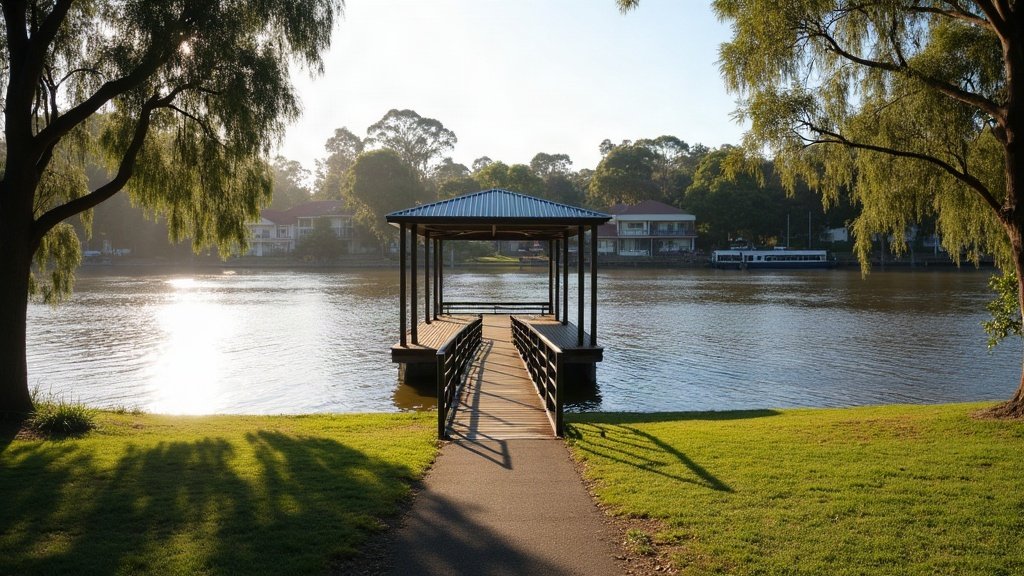
- CityCats and ferries: the council’s CityCats and ferries page says it runs 24 CityCats and 5 KittyCats, with 22 terminals from UQ St Lucia to Northshore Hamilton. The all-stops CityCat runs daily, and you can take a dog or a bike on CityCats and ferries for free.
- Free city loops: the council’s buses page lists the free Spring Hill Loop (route 30) and the City Loop (routes 40 and 50), which arrives about every 10 minutes on weekdays.
- High-frequency buses: the same page says BUZ routes run every 15 minutes or less from 6am to 11.30pm, with no timetable needed.
Dogs on river ferries have set hours. Translink says they can travel between 8.30am and 3.30pm and between 7pm and 6am on weekdays, and all weekend, on a lead and muzzled or in an enclosed carrier. If you are still choosing where to live, the Brisbane City council area guide lists the train lines that run through the city and where Cross River Rail fits in.
How does Brisbane public transport get you to the airport?
This is the main exception to the 50 cent fare. Translink’s airport services page says Airtrain is a non-Translink operator. Fares start from $23.30 between the airport stations and Brisbane City stations, effective 27 April 2026. You can still pay with a go card or contactless card, but Airtrain fares apply and Translink’s transfer rules don’t carry over.
Airtrain runs between 4.30am and 10pm, every 15 minutes at peak times, and the trip between the airports and the city takes about 20 minutes. Children aged 14 and under travel free between the airport and any Brisbane City station with an adult who holds an Airtrain ticket.
Brisbane public transport FAQs
Is there public transport late at night in Brisbane?
Yes, on weekends. Translink lists Nightlink bus and train services between midnight and 5am on Friday and Saturday nights, and the council says Brisbane Metro runs 24 hours on weekends. The free Translink app, which replaced MyTranslink, shows which services run.
Does the 50 cent fare apply outside Brisbane?
Yes, across Translink services. The go card works on bus, train, ferry, tram and on-demand services in greater Brisbane, Ipswich, Moreton Bay, the Redlands, the Sunshine Coast and the Gold Coast. If you are weighing up where to live, our guide to the council areas around Brisbane compares each one.
Do I still need a car?
That depends on where you live and work, so check the trip in the Translink journey planner before you sign a lease. If you are bringing a car from interstate, our guide to transferring your licence and rego to Queensland covers the deadlines.
Sources for this Brisbane public transport guide
- Translink, South East Queensland fares and tickets
- Translink, Concessions
- Translink, Contactless payments
- Translink, Buy and refund tickets
- Translink, About go card
- Translink, Buy and top-up go card
- Translink, Transferring between services
- Translink, Using public transport
- Translink, Bus, train, ferry and tram
- Translink, Airport services
- Translink, Late night services
- Translink, Translink app
- Brisbane City Council, Brisbane Metro
- Brisbane City Council, CityCats and ferries
- Brisbane City Council, Buses
Facts on this page were checked on 18 October 2026.